The Eastern German Renaissance: 7 Unmissable Cultural Landmarks in Leipzig
I first arrived in Leipzig on a late December day. The air was filled with a mix of winter chill and the sweet aroma of roasted chestnuts. Streets and alleys sparkled with festive lights, as the sounds of Christmas markets and church bells intertwined in the background. Once a major city in East Germany, Leipzig has re-emerged with a unique charm that blends classical elegance and avant-garde creativity.
Rather than rushing through a checklist of sights, I slowed my pace and sought the soul of the city in the stillness of winter.
Leipzig is not a boisterous city, but its cultural richness is undeniable. Every building, every square, every cobbled street seems to carry an unfinished story. The following seven landmarks represent the journeys I made on foot through the cold. They are not just tourist attractions; they are the embodiment of Leipzig’s renaissance, a testament to how the city rises from history into the future with new vitality.
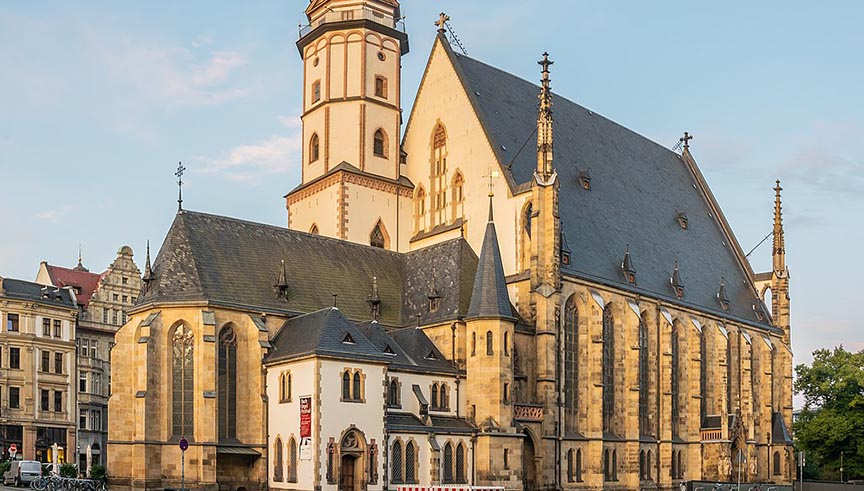
1. St. Thomas Church (Thomaskirche): The Birthplace of a Musical Soul
Snowflakes gently drifted down from the sky, covering the stone roof of St. Thomas Church in a layer of serene purity. Standing before this Gothic structure, I could almost hear the distant echo of Bach’s melodies—notes that seemed to transcend time.
The church’s most renowned “resident” is none other than Johann Sebastian Bach, who served as its music director for 27 years starting in 1723. His tomb lies within the church, making it a place of pilgrimage for music lovers from around the globe.
Inside, the church is solemn and majestic, with stained glass windows shimmering softly in the winter light. I attended a pre-Christmas organ concert at dusk. As the deep tones resonated, the entire church became a body of sound, vibrating with spiritual intensity. In December, no visit to Leipzig is complete without this musical dialogue with Bach inside St. Thomas Church.
2. St. Nicholas Church (Nikolaikirche): The Heart of the Peaceful Revolution
Just a few minutes’ walk from St. Thomas Church stands the unassuming yet solemn St. Nicholas Church. It is not famous for its architecture, but for a revolution without weapons.
In 1989, it became the starting point of East Germany’s peaceful revolution. Every Monday, citizens gathered here with candles, quietly calling for freedom and reform. These lights eventually contributed to the historic fall of the Berlin Wall.
Inside, the church’s dreamy palm-columned ceiling evokes a deep sense of awe. A church can be more than a religious sanctuary—it can bear witness to the people’s will.
Today, Monday “peace prayers” still take place here, preserving a solemn ritual rooted in the city’s past. On a cold winter night, lighting a candle and sitting in the pews, the longing for peace still rings true.
3. Leipzig University and Augustusplatz: A Crossroad of Academia and Modernity
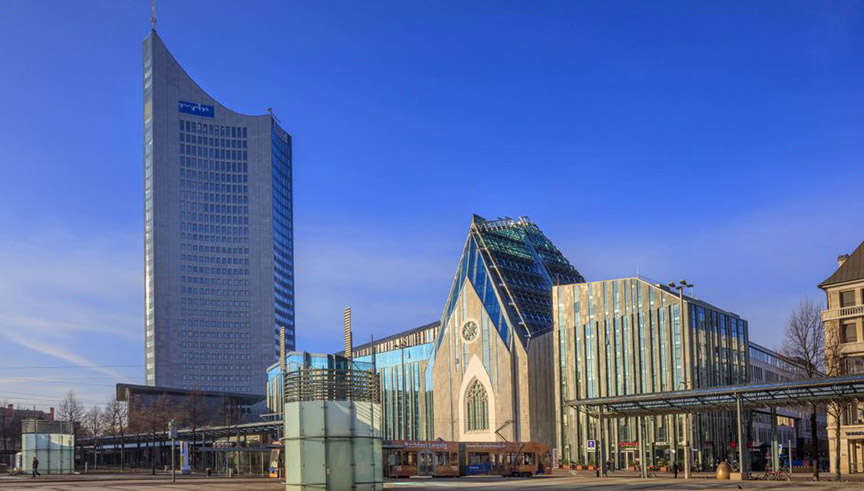
If St. Thomas Church is the soul of Leipzig, then Leipzig University is its intellect. Founded in 1409, it is one of Germany’s oldest universities, alma mater to great thinkers such as Goethe, Nietzsche, and Angela Merkel.
In winter, Augustusplatz is surrounded by a Christmas market and an ice rink. Children’s laughter and carousel music echo in the air. But I was more drawn to the glass façade of the university’s main building, reflecting the modern silhouette of the Paulinum.
This building, inspired by the former Paulinerkirche, skillfully blends commemoration with innovation. It functions both as a university auditorium and a public space.
At this crossroads, I witnessed how Leipzig leans on education and culture to shape its future. Evening lights illuminated the square’s steel structures and the ancient clock tower alike, creating a mesmerizing intersection of past and present.
4. Old Town Hall (Altes Rathaus): A Renaissance Masterpiece
Walking into the Market Square (Marktplatz) in Leipzig’s old town, the most striking structure is the Old Town Hall, with its golden clock tower and red-tiled façade. Built in 1556, it is one of central Germany’s finest Renaissance buildings.
Entering the building felt like stepping into a historical painting: ancient council halls, reconstructed meeting rooms, and intricately carved wooden beams told stories of the city’s status as a regional powerhouse in the 16th century.
The building now houses the Leipzig City History Museum, which offers a rich collection covering everything from medieval merchant fairs to East German socialism.
On a winter evening, standing on the balcony of the Town Hall and looking out over the square bathed in holiday lights, I could almost see merchants negotiating, orators debating, and reformers speaking with passion—all within the fabric of time.
5. Mendelssohn House (Mendelssohn-Haus): The Final Score of a Maestro
At the end of a quiet, snow-dusted street stands a charming yellow villa—the final residence of the great composer Felix Mendelssohn. This was where he spent the last years of his life, creating some of his most emotionally resonant works, including many of his beloved Songs Without Words. Today, the house has been meticulously restored and transformed into a museum that honors both his music and his personal life.
Inside, visitors can explore rooms filled with original manuscripts, personal letters, and Mendelssohn’s own conducting baton. The living room and study have been lovingly recreated, evoking the atmosphere of a 19th-century composer’s world.
My favorite feature was the beautifully preserved Steinway piano, which is still playable. On weekends, the house hosts intimate piano recitals, where Mendelssohn’s compositions are brought to life in the very space where they were once conceived. As I stood beside his writing desk, watching snow fall gently outside and listening to soft melodies inside, I felt time dissolve. For a brief moment, I could almost see him—dressed in his long coat, deep in thought—gazing out the window as he shaped another passage of music.
6. Leipzig Central Station (Hauptbahnhof): Industrial Aesthetics and the Pulse of the City
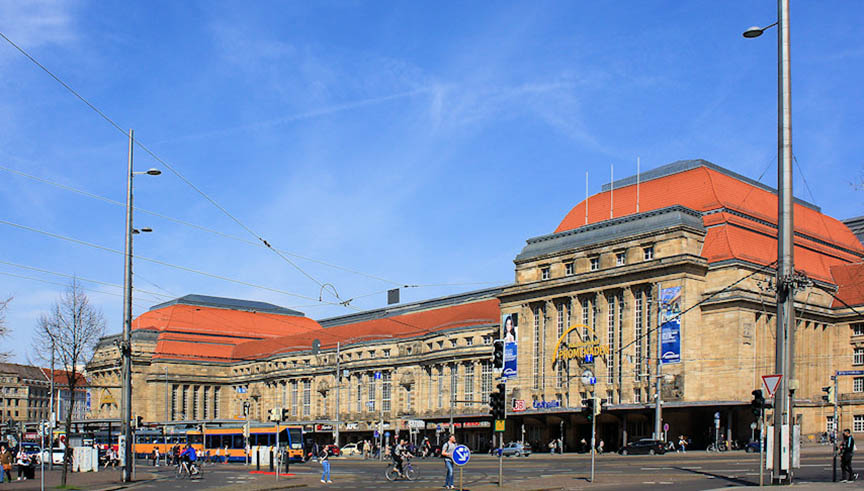
They say a train station reveals a city’s soul, and Leipzig Central Station does just that—on a grand scale. It is not only Germany’s largest terminal-style station, but also a striking monument to early 20th-century industrial ambition. Opened in 1915, the station marries neoclassical design with sweeping metal structures, high arched ceilings, and polished stone halls that reflect both power and grace.
When I arrived in Leipzig in late December, the station was more than a transport hub—it had transformed into an extension of the city’s vibrant Christmas market. The main concourse was lined with stalls selling spiced mulled wine, roasted chestnuts, handcrafted ornaments, and bratwurst sizzling over open flames.
The mix of hurried commuters and relaxed holiday shoppers created a fascinating rhythm—an interplay of urgency and festivity. Above all, the lower levels of the station stood out, now home to a sleek shopping arcade and a rotating series of exhibitions. This fusion of functionality and culture illustrates Leipzig’s broader ethos: respecting the architectural past while embracing modern use. In this place of movement and memory, the city’s heartbeat felt tangible.
7. Old Exchange (Alte Handelsbörse): The Marketplace of Ideas
Tucked into the northeast corner of Leipzig’s Old Market Square, the Old Exchange (Alte Handelsbörse) is an architectural jewel that embodies the city’s mercantile past and cultural renaissance. Built in 1678, this two-story building was originally designed as a meeting place for merchants, symbolizing Leipzig’s importance as a major trade center in the Holy Roman Empire. Its elegant white-and-gold Baroque façade, intricate stucco work, and grand staircase reflect the ambition and wealth of the city during the 17th century.
Today, the building has taken on a new role as a venue for cultural events, hosting everything from literary lectures to intimate chamber music concerts. I visited on a snowy morning, just as the city was blanketed in fresh white powder, and stepped inside to find a lecture underway on the evolution of German literature from the Enlightenment to the present day. The atmosphere was at once scholarly and reverent.
Inside, the warm glow of candlelight bounced off the elaborately painted ceilings and historic wooden furnishings, creating an ambiance both regal and intimate. The thick wooden doors seemed to seal out the cold and the centuries, drawing visitors into a timeless dialogue of ideas. What once echoed with the negotiation of wool and spices now resonates with the sound of violins and philosophical discourse.
From Winter Stillness to Cultural Revival
Leipzig’s rise following the dissolution of East Germany was not driven by skyscrapers or flashy development. Its renaissance is rooted in reverence for cultural heritage and thoughtful reinvention.
The centuries-old churches, universities, town halls, and museums have been given renewed purpose.
As the Christmas season came to a close, I wandered the snow-dusted old town, sipped gingerbread lattes from a café across from the library, and listened to a young boy playing the clarinet outside St. Thomas Church. I didn’t rush to leave—because in Leipzig, culture is never a thing of the past.
It lives on in the evening lights lining the streets, in the libraries that greet each morning, in a symphony that never quite ends.


You May Also Like

Top 5 Must-Visit Museums in Vancouver
Nuremberg Must-Visit Attractions: Exploring a City Where History and Modernity Intertwine