First Arrival in Banff: Truly “Surrounded by Nature” Amidst the Rockies
I arrived in Banff National Park for the first time in the early morning.
Heading west from Calgary, the city gradually faded away, replaced by plains, forests, and the increasingly distinct outlines of mountains. As the car actually entered the national park, I had an immediate realization: this wasn’t just “scenery,” but an entirely different kind of spatial realm.
The air grew colder and crisper, and the light became sharper. The mountains were not merely a backdrop; they were a structural presence that enveloped everything.
It was in that moment I understood that Banff is not just a “destination,” but a place that compels you to redefine your understanding of nature’s scale.
Lake Louise: An Unreal First Impression of Color
My first stop in Banff was Lake Louise.
I paused for a long time when I first laid eyes on the water.
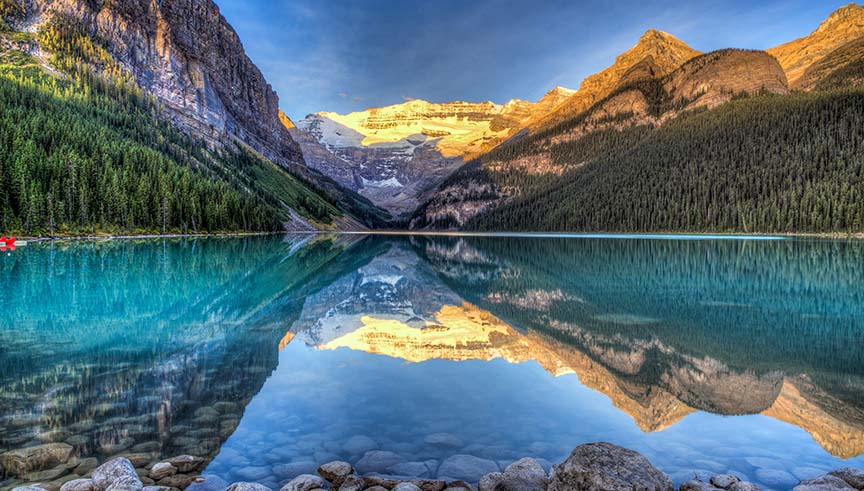
The lake’s color was neither ordinary blue nor green, but a truly surreal “glacial blue.” Snow-capped peaks in the distance were mirrored on the water’s surface, and the pine forests along the shore looked as though they had been arranged with precision.
I strolled slowly along the lakeshore without feeling the need to take many photos; every angle looked like a picture that had already been digitally enhanced.
What struck me most wasn’t just the beauty, but the sense of “stillness.” The scenery didn’t change, yet I felt a constant urge to stop and linger.
I sat by the water for a while, simply watching the gentle ripples.
It wasn’t the quiet of the city, but the silence that comes from the sheer vastness of the space.
Moraine Lake: Blue and Silence at a Higher Altitude
My second stop was Moraine Lake.
Compared to Lake Louise, this place was higher, colder, and felt more “remote.”
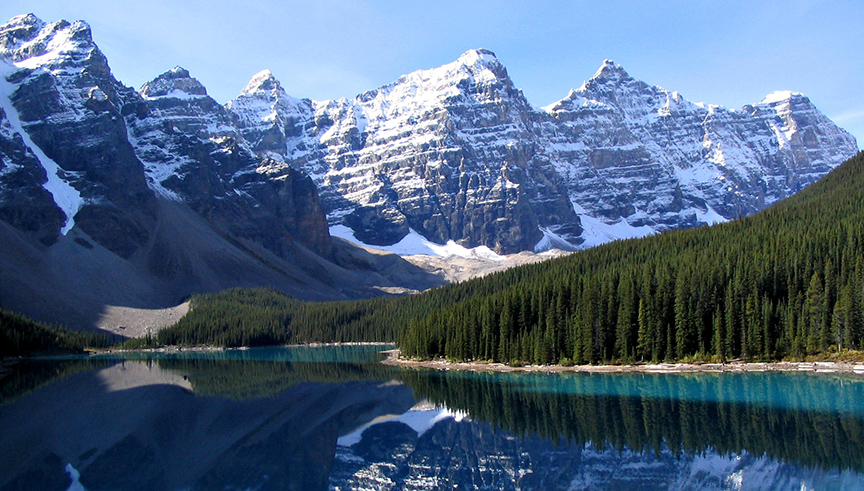
Standing at the viewpoint, the first thing I felt wasn’t the lake itself, but the imposing presence of the valley—ten peaks encircling the water, creating a sense of enclosed space.
The water shared that signature blue hue, yet due to the higher elevation, the color appeared deeper.
I walked less here, spending most of my time simply standing and gazing at the view.
For a moment, I felt as though the landscape here transcended the “human scale”—it seemed more like a tangible trace left by geological time. Moraine Lake made me realize that the beauty of Banff isn’t something you get up close and personal with; rather, it is a beauty defined by distance.
Hiking Trails: Understanding the Rockies One Step at a Time
In Banff, I tried out a simple hiking trail.
The route wasn’t particularly difficult, but the scenery shifted noticeably: starting in the forest, moving into open terrain, and finally reaching a spot with a panoramic view of the valley.
It began in a pine forest, where the air was thick with the scent of resin. After walking a while, the ground grew drier, and the view gradually opened up.
I lingered for a long time when I reached a vantage point overlooking the valley.
Below lay a tapestry of rivers, forests, and roads; above rose the snow line and rugged rock faces.
In that moment, I realized that hiking in Banff isn’t just a form of exercise—it’s a way of shifting your sense of scale.
You aren’t merely walking; you are gradually stepping into a vast, expansive space.
The Rocky Mountains: An Ever-Present Backdrop
During my days in Banff, the Canadian Rockies were always within sight.
Whether I was in town, by the lake, or out on the highway, they never disappeared.
Sometimes they loomed close, revealing intricate details; at other times, they appeared distant, reduced to mere silhouettes.
This constant presence felt unique; unlike city architecture that “surrounds” you, the mountains always remained “beyond” you.
I began to understand why people describe the Banff experience as “immersive nature”—because you simply cannot treat the landscape as a mere backdrop.
The Town of Banff: A Human Enclave Amidst Nature
The town of Banff itself is small but remarkably orderly.
Its main street is lined with restaurants, cafés, souvenir shops, and plenty of stores selling outdoor gear.
I enjoyed several meals there and spent long stretches of time sitting in the cafés.
What’s fascinating is that the town’s existence doesn’t diminish the presence of nature; instead, it serves as a sort of “buffer zone” within the natural landscape.
You can grab a meal here after returning from the mountains, or rest after visiting the lakes.
It isn’t the final destination, but rather a waystation in the midst of a nature-focused journey.
Banff at Dusk: When the Light Transforms Everything
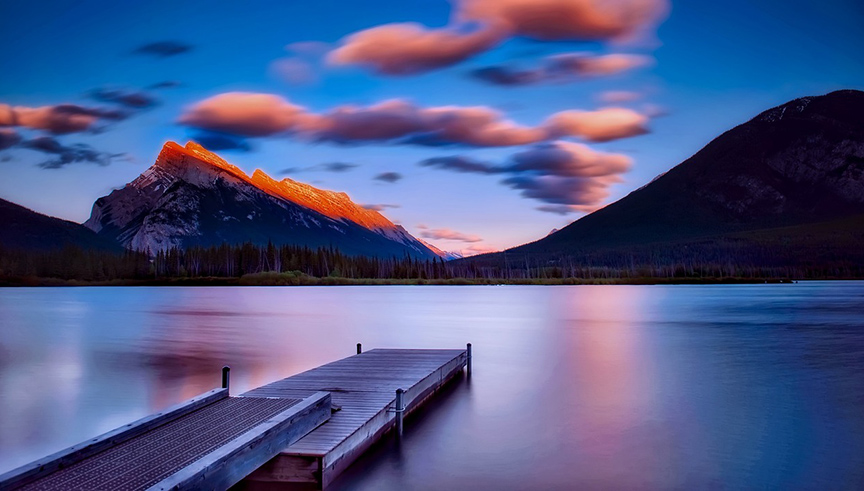
What I found most unforgettable about Banff was the time around dusk. As the sun sets, the mountains shift in color—transforming from a bright, grayish-white to a dark silhouette tinged with orange.
The surface of the lake also gradually darkens, yet it never loses its color.
I returned to the vicinity of Lake Louise as the day drew to a close, watching the light slowly fade away.
The transformation was gradual, yet inexorable.
In the city, night falls abruptly; in Banff, however, it seems to seep in by degrees.
Banff is an experience of scale, not merely a tourist destination
Before leaving Banff, I cast one last glance toward the Rocky Mountains.
The morning light was crisp, the air pristine, and the town had not yet fully stirred to life.
Reflecting on my time there, I realized that the essence of Banff National Park lies not in any single attraction, but in the way it constantly reshapes your perception of space.
If I were to sum up the experience in a single sentence: Banff is not a place for simply “viewing scenery,” but a place where you relearn how to sense the true scale of the world.


You May Also Like

Washington, D.C. Culinary Journey: Exploring the Best Local Food Gems

Savvy Flight Booking: How to Secure Affordable Mumbai Flights and Top Booking Platforms